CoolSky Structures — Slideshow for Melton Design/Build
CoolSky Structures
What has actually been built — a slideshow for Melton Design/Build
Built iterations of the Baer / Zomeworks passive heating and cooling lineage, shown with photos and drawings from the Solar Fool knowledge base (kb.solarfool.org). Prepared 2026-10-11 for the Longmont container discussion.
What is CoolSky?
- A community name for the Baer / Zomeworks passive heating-and-cooling lineage, not a single current product
- Lineage: DrumWall (installed 1971; one 1981 manual says 1972), then Cool Cell, then Double Play
- Water stores heat; a roof radiates it to the night sky
Sources: https://kb.solarfool.org/concepts/drumwall/ · https://kb.solarfool.org/works/coolsky/
Iterations at a glance
- Water on top: Andy Shack, overhead pipes; Cool Cell, ceiling reservoir; NM Container, polyurethane bags with styrofoam rafts (Oct 14 meeting; KB conflict not formally resolved)
- Water on the side: Davis studio, Sol-Mod, vertical arrays
- With louvers: Andy Shack, Cool Cell
Physics 1: the night sky pulls heat out
- Clear, dry New Mexico nights: a plate given about 102 W/m² of electric heat still could not reach ambient air temperature
- Net outgoing radiation, same temperature: 98.9 W/m² clear versus 15.1 W/m² overcast
- Humidity weakens it; the KB's measurements are all from clear, dry New Mexico skies
https://kb.solarfool.org/concepts/night-sky-radiative-cooling/
Physics 2: water storage that flows
- Zomeworks 2002 claim: flowing water carries heat about 4,000 times better than air; 1,000 cubic feet of air holds the heat of 2 gallons of water
- Radiant ceilings react faster than floors, but convect poorly downward
https://kb.solarfool.org/concepts/di-thermal-roofs/
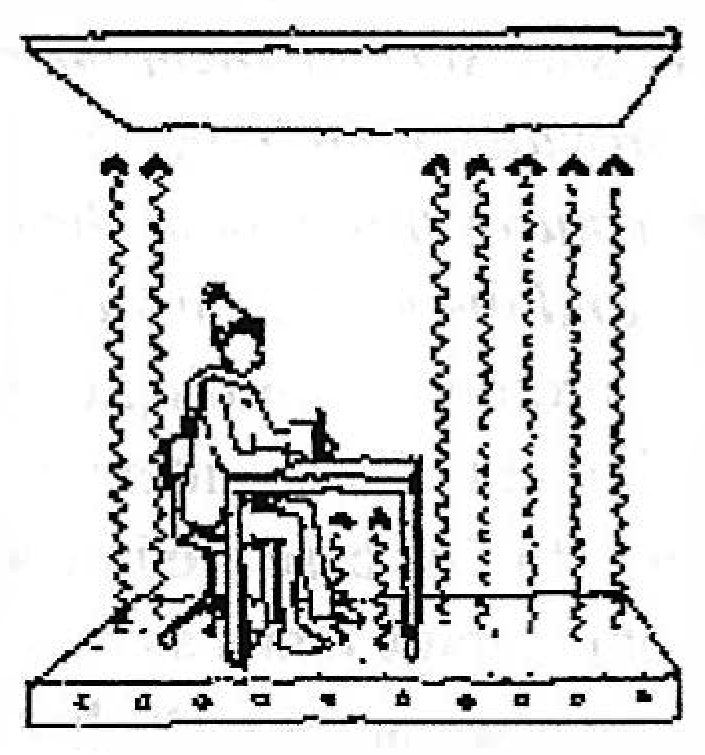
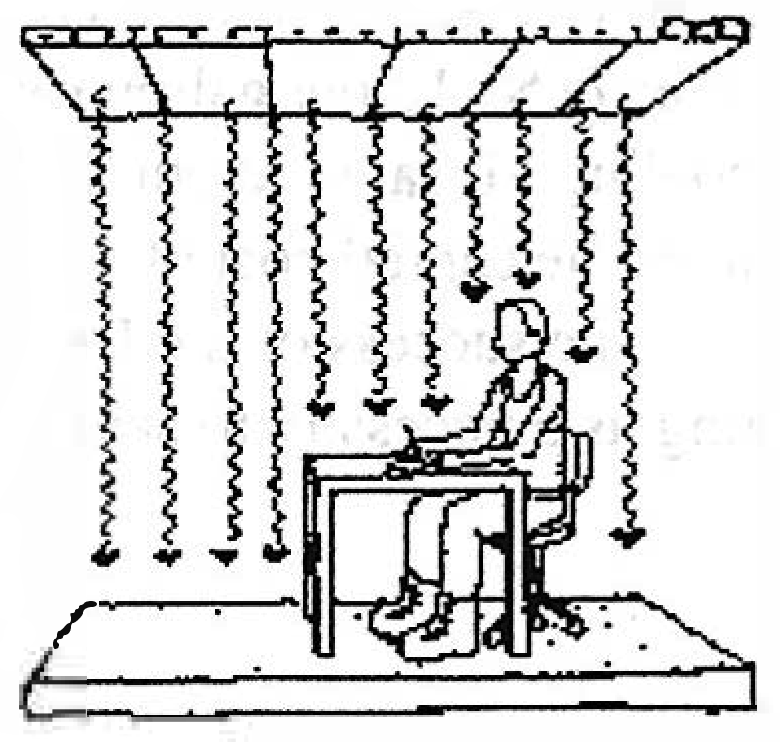
Figs. 9.6 and 9.7, Zomeworks Di-Thermal Roofs (figures from Ed Allen, How Buildings Work, 1995); no individual author named.
Andy Shack (1988): the test bed
- Zomeworks yard, Albuquerque; KB says 10 ft x 10 ft, Bruce says 8 ft x 12 ft Tuff Shed (Oct 14 meeting)
- Sub-ceiling array of 8-inch water-filled PVC pipes, rooftop black pig-mat radiator, aluminum louvers below the array
- Records show about 250 gallons of storage and 65 sq ft of roof radiator
- No longer extant (Bruce Davis, Oct 14 meeting)
https://kb.solarfool.org/concepts/andy-shack/
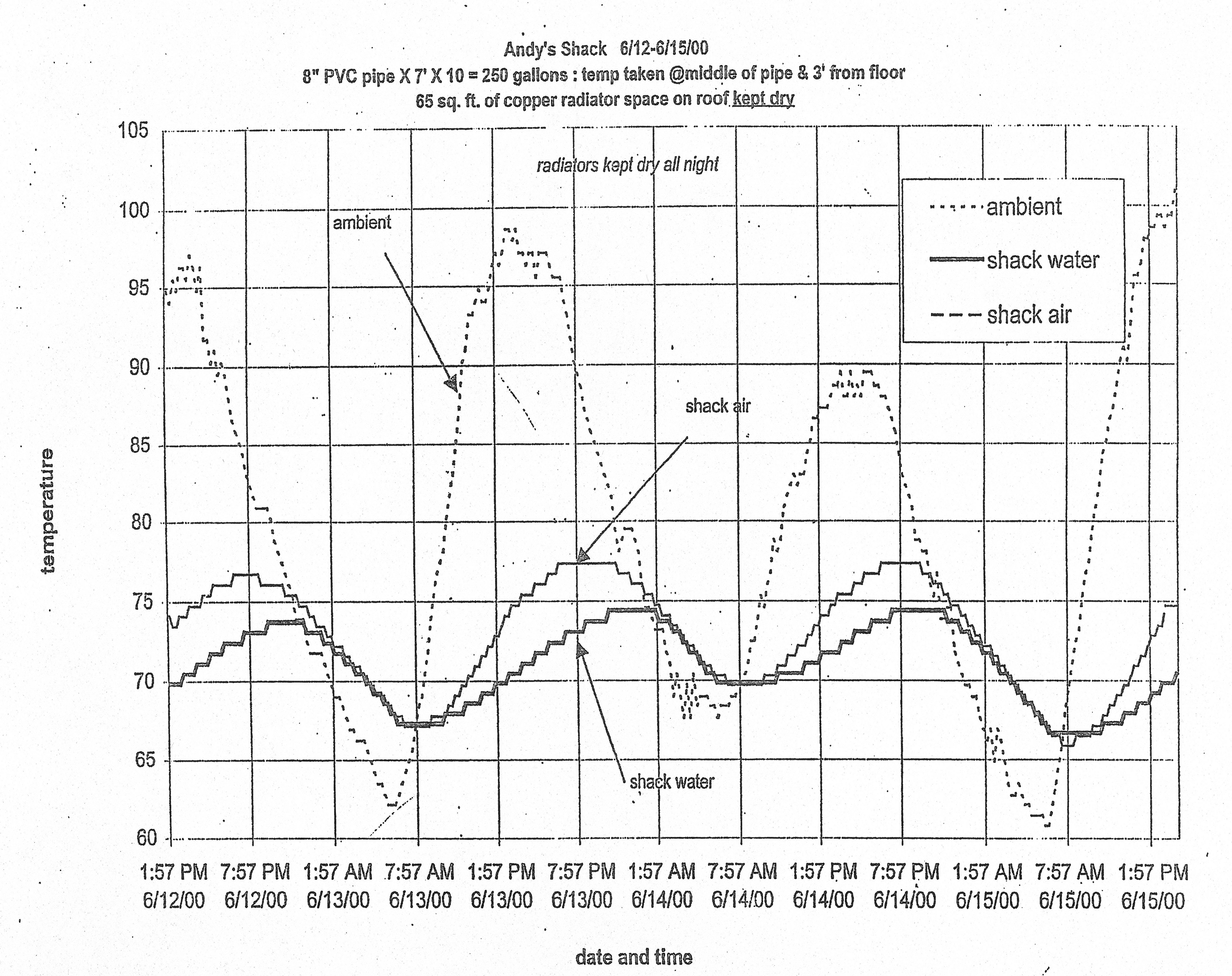
Zomeworks project documentation (scanned); no individual author named.
Andy Shack: monitored, but no summary figures
- Logged June 12–15, 2000 and June 27 – July 1, 2002 (shack, storage pipe, ambient, and a white comparison plate)
- The KB does not establish a summarized temperature range for the shack. The charts are shown as records.
https://kb.solarfool.org/concepts/andy-shack/
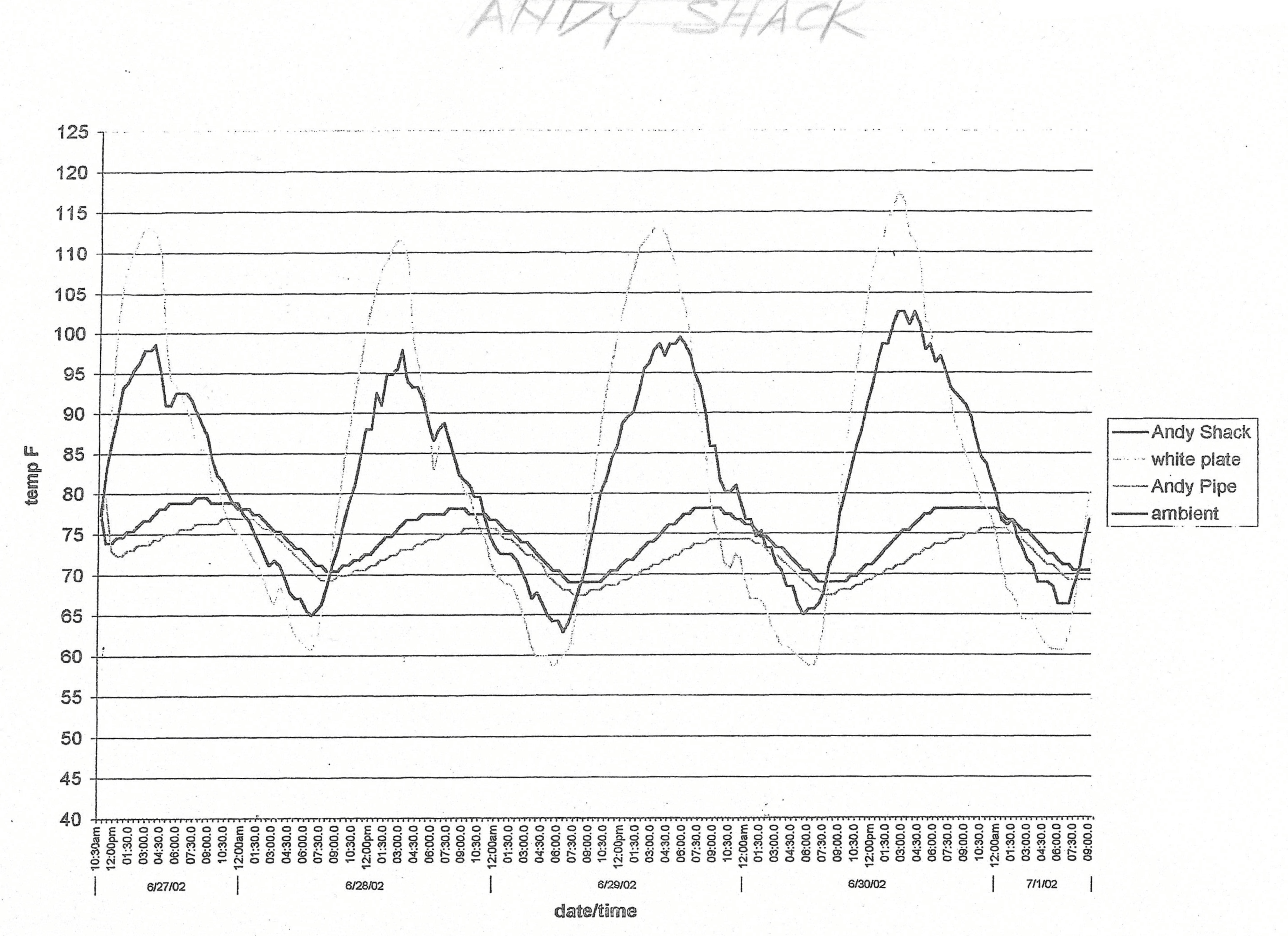
Zomeworks project documentation (scanned); no individual author named.
Cool Cell cabinets: the commercial record
- Late 1980s: the closed loop was reborn to cool remote telecom battery cabinets
- First in the line: US 4,913,985 (1990), a flat radiator above a water container, circulating by thermosiphon
- Zomeworks sold thousands; about 70% of its sales for several years
https://kb.solarfool.org/concepts/cool-cell-architectural-climate-control/ · https://kb.solarfool.org/concepts/steve-baer-double-play-thermosiphon/
Cool Cell for buildings (c. 2002 brochure)
- Ceiling water reservoirs plus roof radiator/absorbers; five operating modes
- Summer: no electricity, refrigerants or compressor; winter uses a low-power pump
- Vendor estimate for a storage building (40–95°F range, not a house): about $3.50/ft²/year at $0.10/kWh
- Works best in dramatic, sunny-winter climates
https://kb.solarfool.org/concepts/cool-cell-architectural-climate-control/
Davis studio, Albuquerque (2004): the system
- 236 sq ft, half a converted garage; cooling only — drainback pump for winter heat never installed (Oct 14 meeting)
- 12 polypropylene Sky Mat radiators (127 sq ft) on the garage roof; thermosiphon, no pump
- 200 gallons in vertical 4-inch PVC pipes, 300 sq ft of surface; flexible laboratory tubing for connections
- Ran 5–7 years, no leaks under pressure (Bruce Davis, Oct 14 meeting)
https://kb.solarfool.org/concepts/bruce-davis-studio/
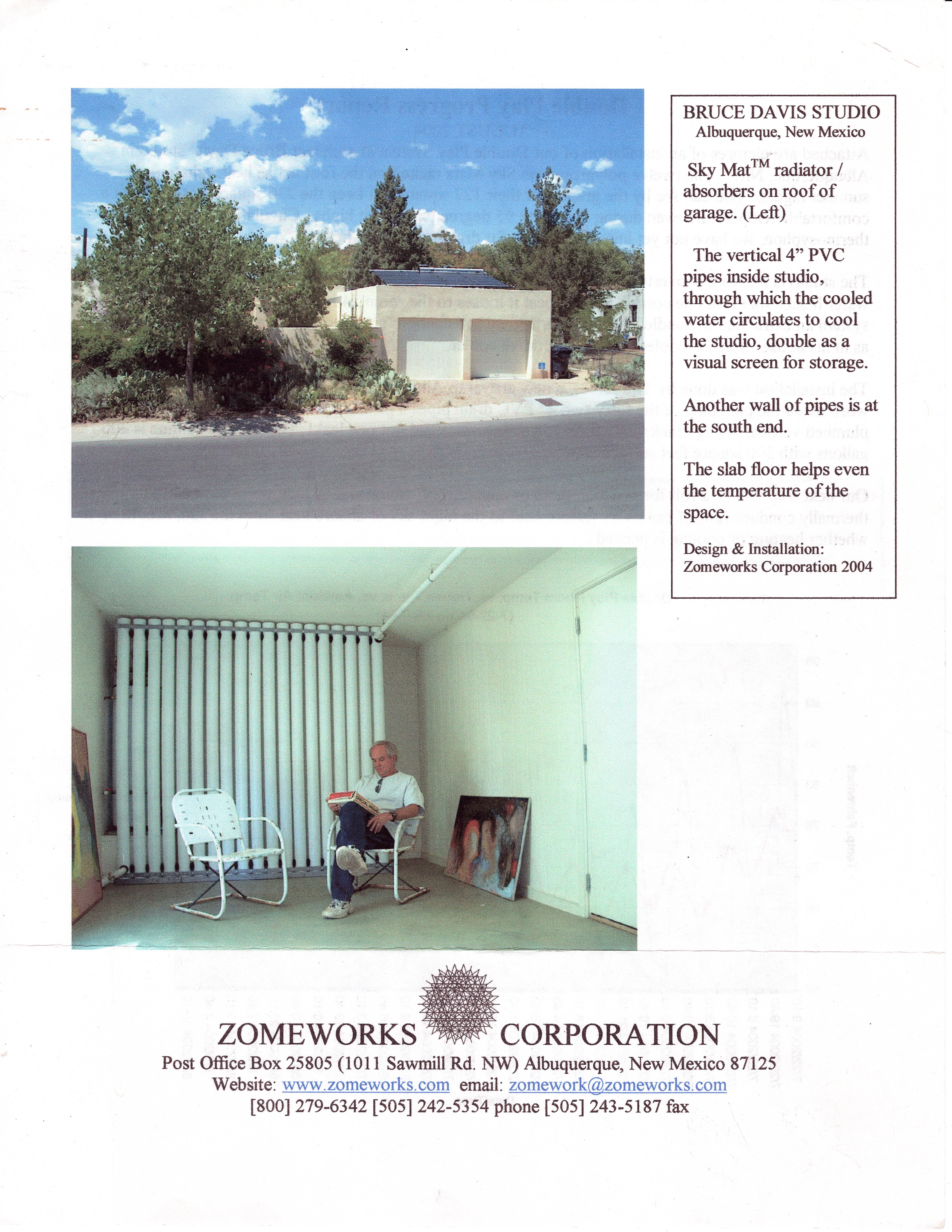
Zomeworks Double Play Progress Report, August 2004 (scanned); no individual author named.
Davis studio: measured temperatures
- Condition: Albuquerque, July 22 – August 6, 2004, one studio, a gas water heater adding load
- Studio held 73.5-78°F while ambient ranged 58-94.5°F (Kayatekin summary; the report cites 95°F highs)
- Owner report, not a measurement: no noise, no fan, no added moisture
https://kb.solarfool.org/concepts/bruce-davis-studio/
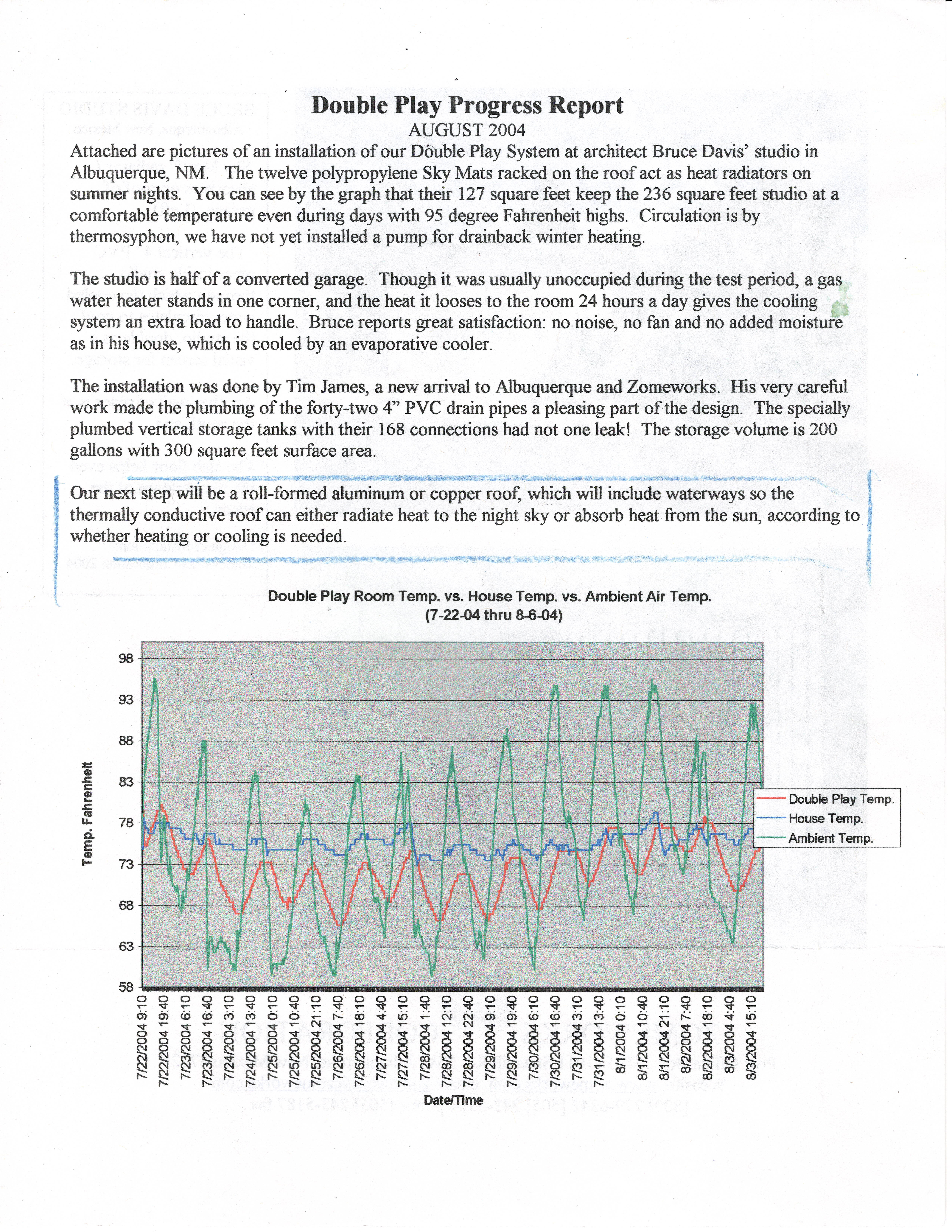
Zomeworks Double Play Progress Report, August 2004 (scanned); no individual author named.
Sol-Mod house: exterior
- Small passive-solar modular house by Bruce Davis with Karen Terry, New Mexico
- Lifted on concrete piers in a piñon-juniper setting
- Defining feature: a vertical water wall behind south glass, used as a Trombe wall
https://kb.solarfool.org/people/bruce-w-davis/
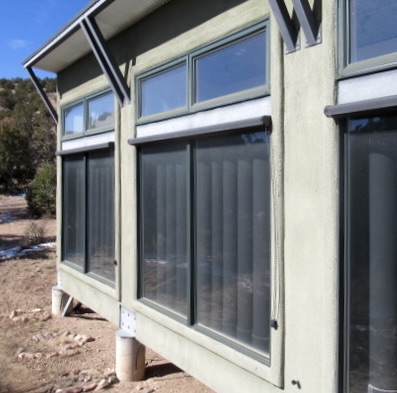
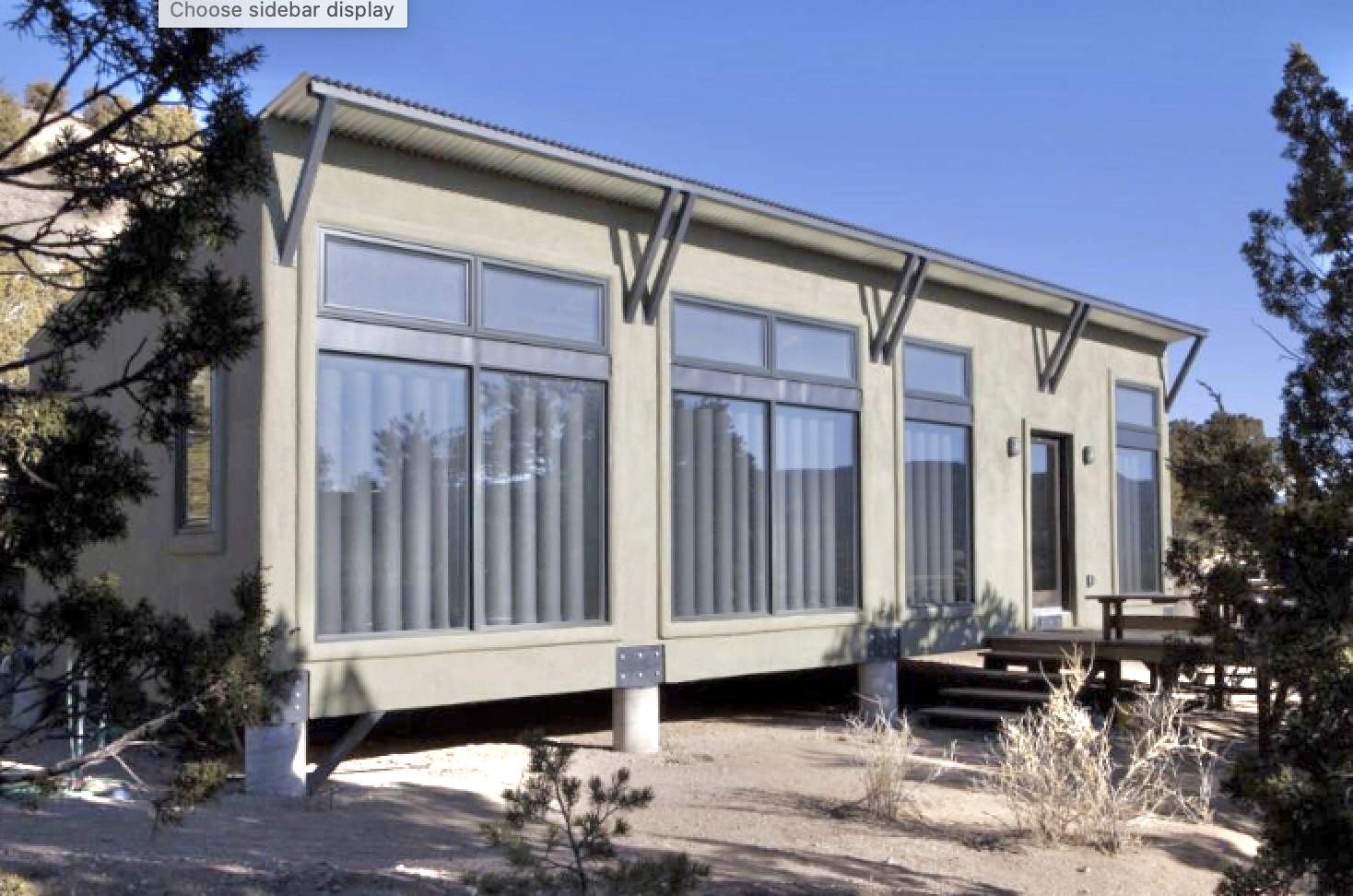
Sol-Mod exterior photos (c. 2017 and undated). Credit not established in raw record.
Sol-Mod house: interior
- The water columns store solar heat by day and release it overnight; 8–10" irrigation ABS(?) pipes (Oct 14 meeting)
- Originally for heating only; now can also be used for cooling (Oct 14 meeting)
- Operable clerestory windows under the overhang admit winter sun and vent summer heat
- One leak in service — that cylinder was emptied and not refilled (Bruce Davis, Oct 14 meeting)
https://kb.solarfool.org/people/bruce-w-davis/
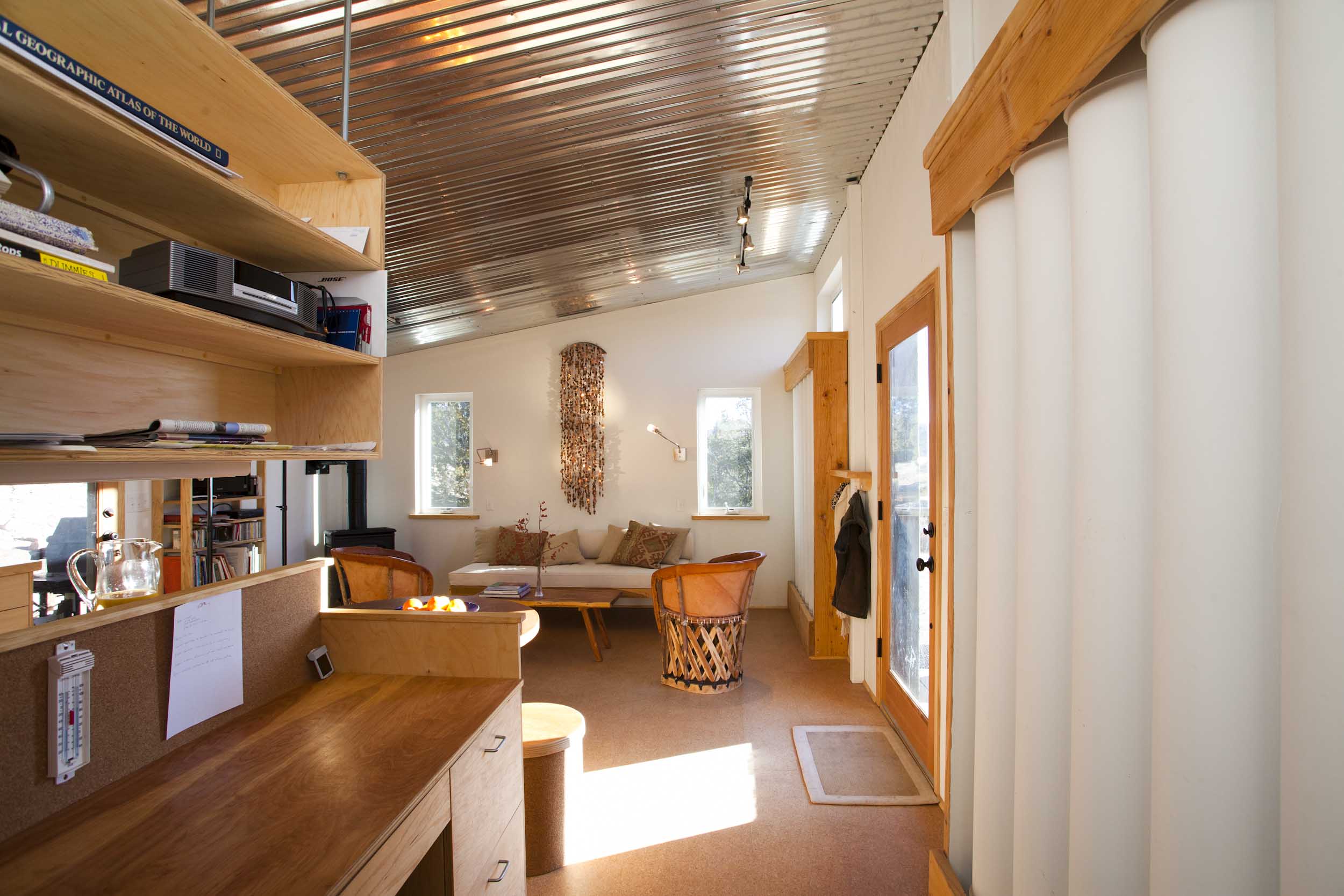
Photo © Marc Romanelli, 2 February 2011.
Sol-Mod house: floor plan
- Davis' hand drawing of the plan, shown for layout and intent only
- The KB does not establish this: dimensional specifications from the drawing
- The house is documented in the KB by photographs and Davis' drawings
https://kb.solarfool.org/people/bruce-w-davis/
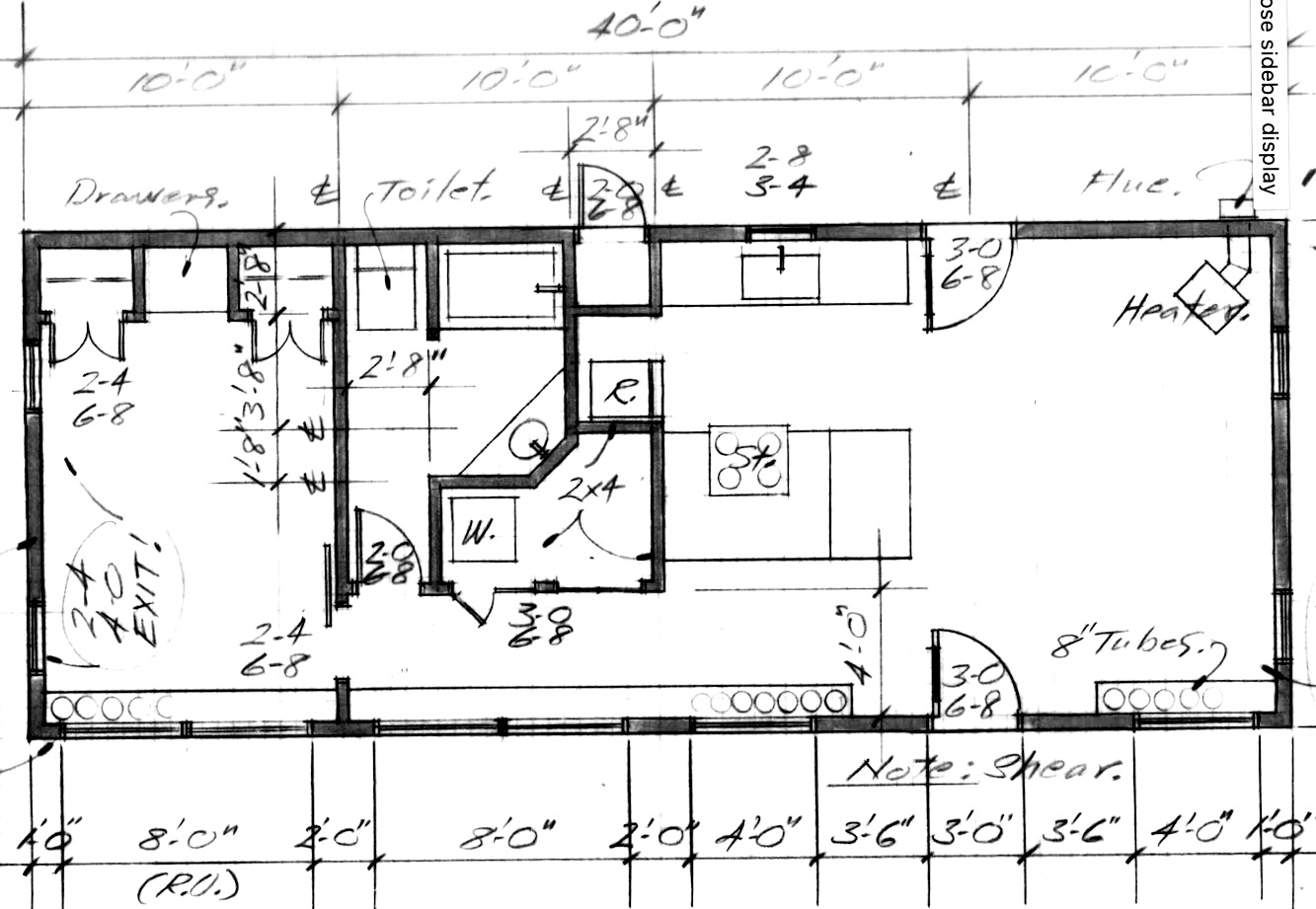
Bruce Davis hand drawing, scanned (undated).
Sol-Mod house: section detail
- Davis' hand-drawn section through the building
- Its drainable vertical water array seeded his later, unbuilt Double Play 2.0 concept
- The KB does not establish this: dimensions or construction specifications from the drawing
https://kb.solarfool.org/people/bruce-w-davis/
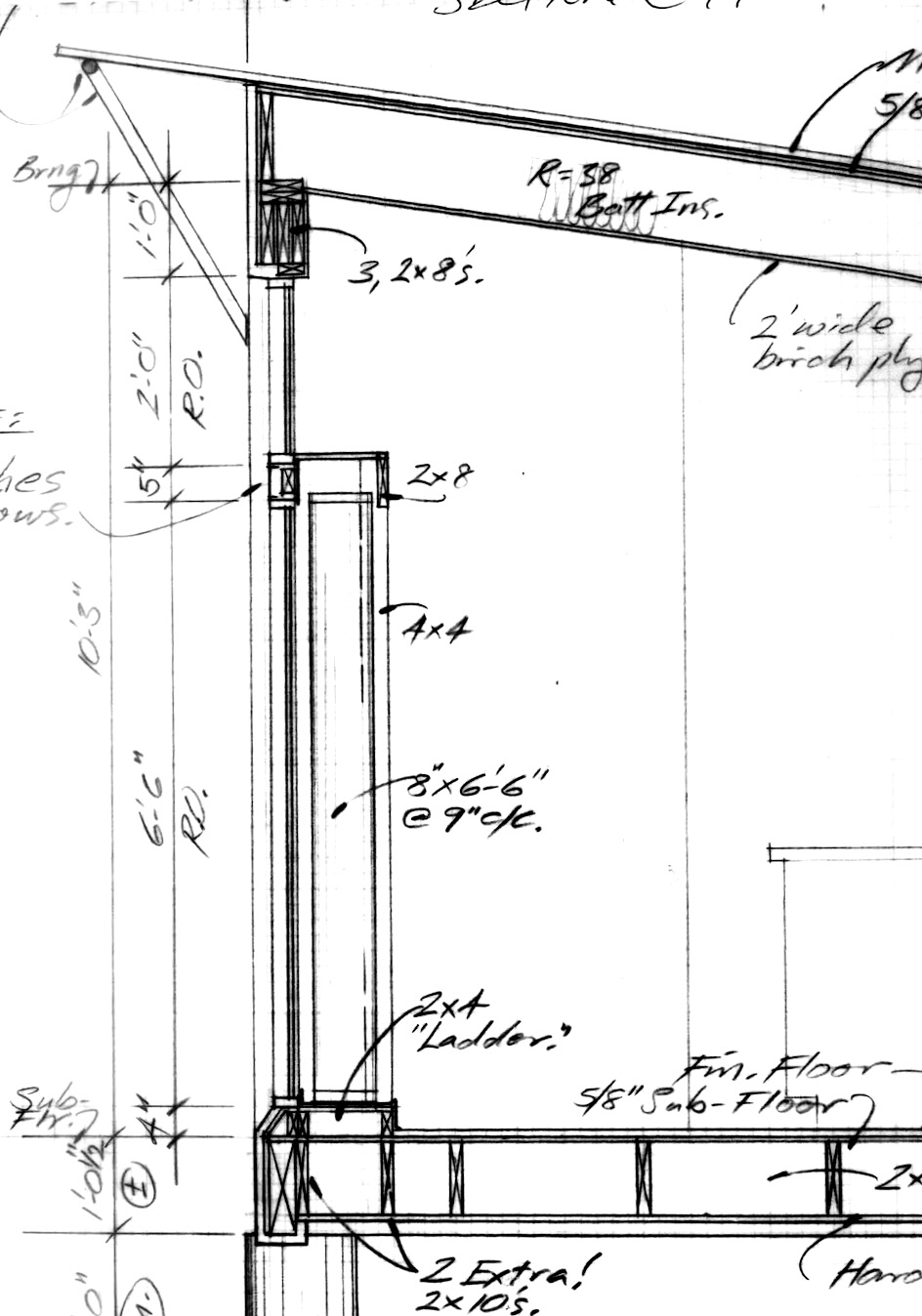
Bruce Davis hand drawing, scanned (undated).
The NM container: current status
- Zomeworks describes a 20 ft x 8 ft cargo container retrofitted as a Double Play structure, "to be tested in Albuquerque"
- Photos dated circa 2025 per the record; black absorber panels on the south wall, radiant ceiling inside
- Cost is the stated hurdle; the KB does not establish test results
https://kb.solarfool.org/concepts/zomeworks-container-prototype/
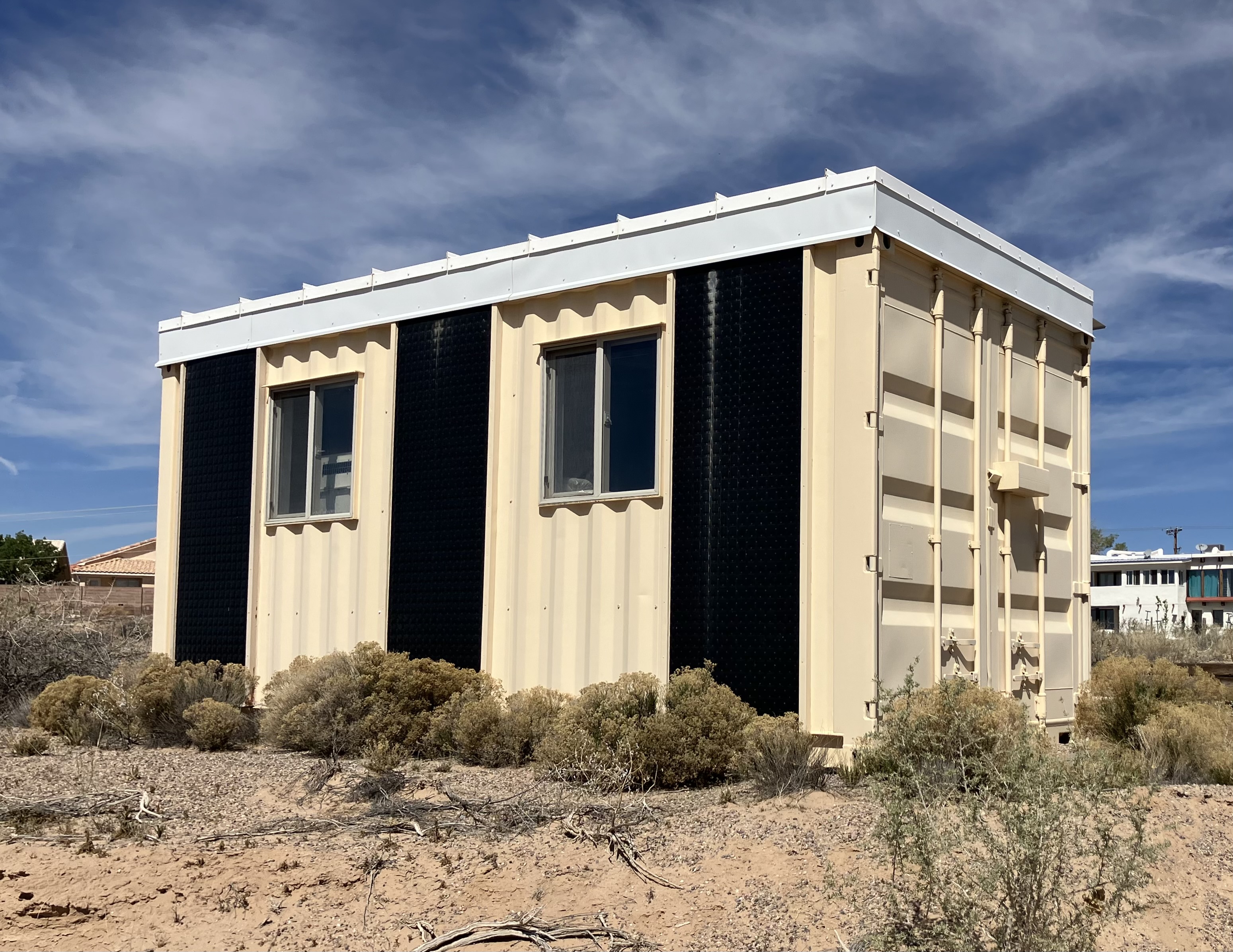
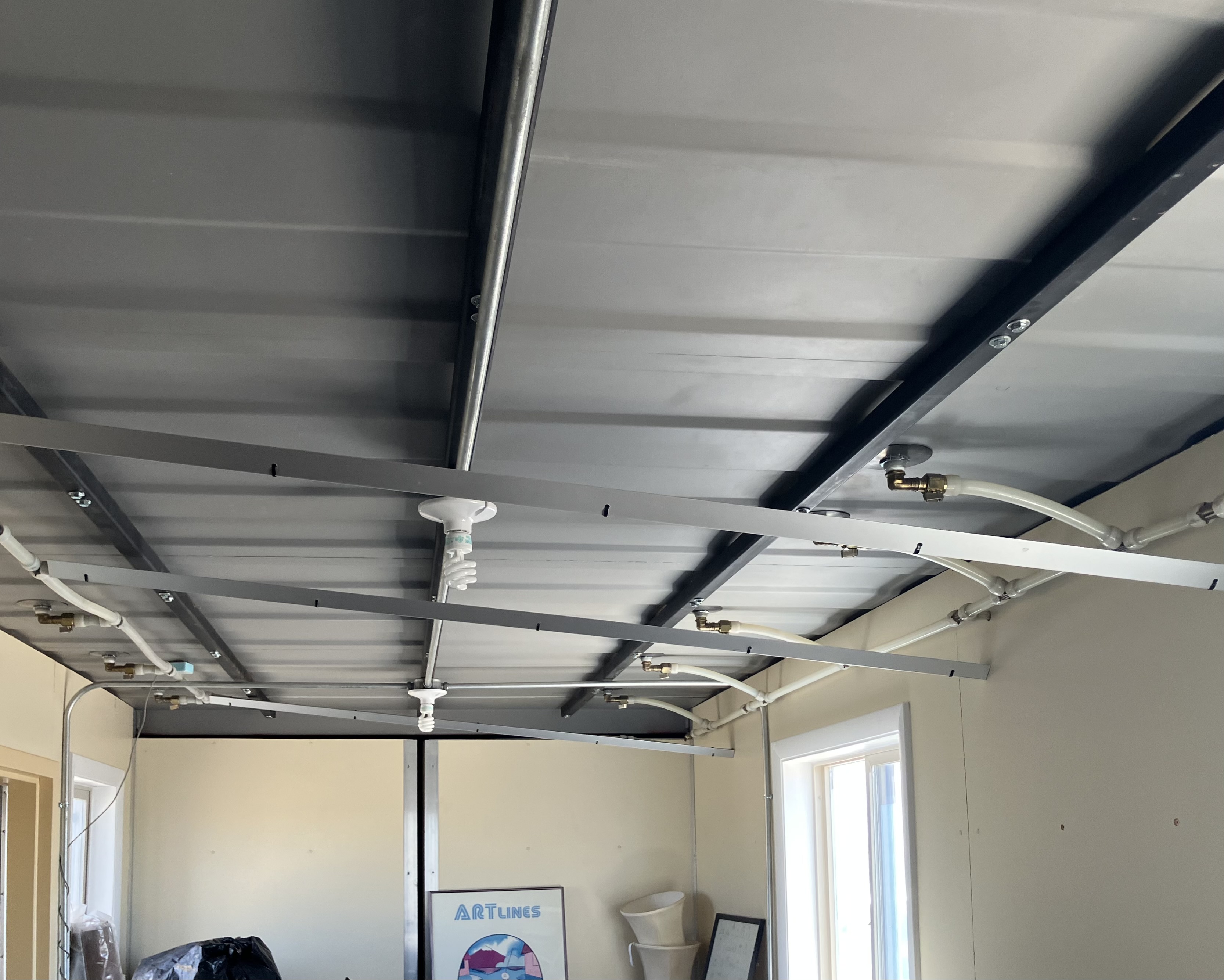
Credit not established in raw record ("Source unknown").
The NM container: schematic and meeting details
- July 2026 hand schematic: roof night-cooling radiator, collector, and a water reservoir inside the insulated container
- Oct 14 meeting: water on top, polyurethane bags with styrofoam rafts, Energy Solaire collectors, no louvers
- Primarily Baer family storage; more of a Cool Cell — keeps temps 40°F–90°F, not designed for people
- Bags need to be drained in winter
https://kb.solarfool.org/concepts/zomeworks-container-prototype/
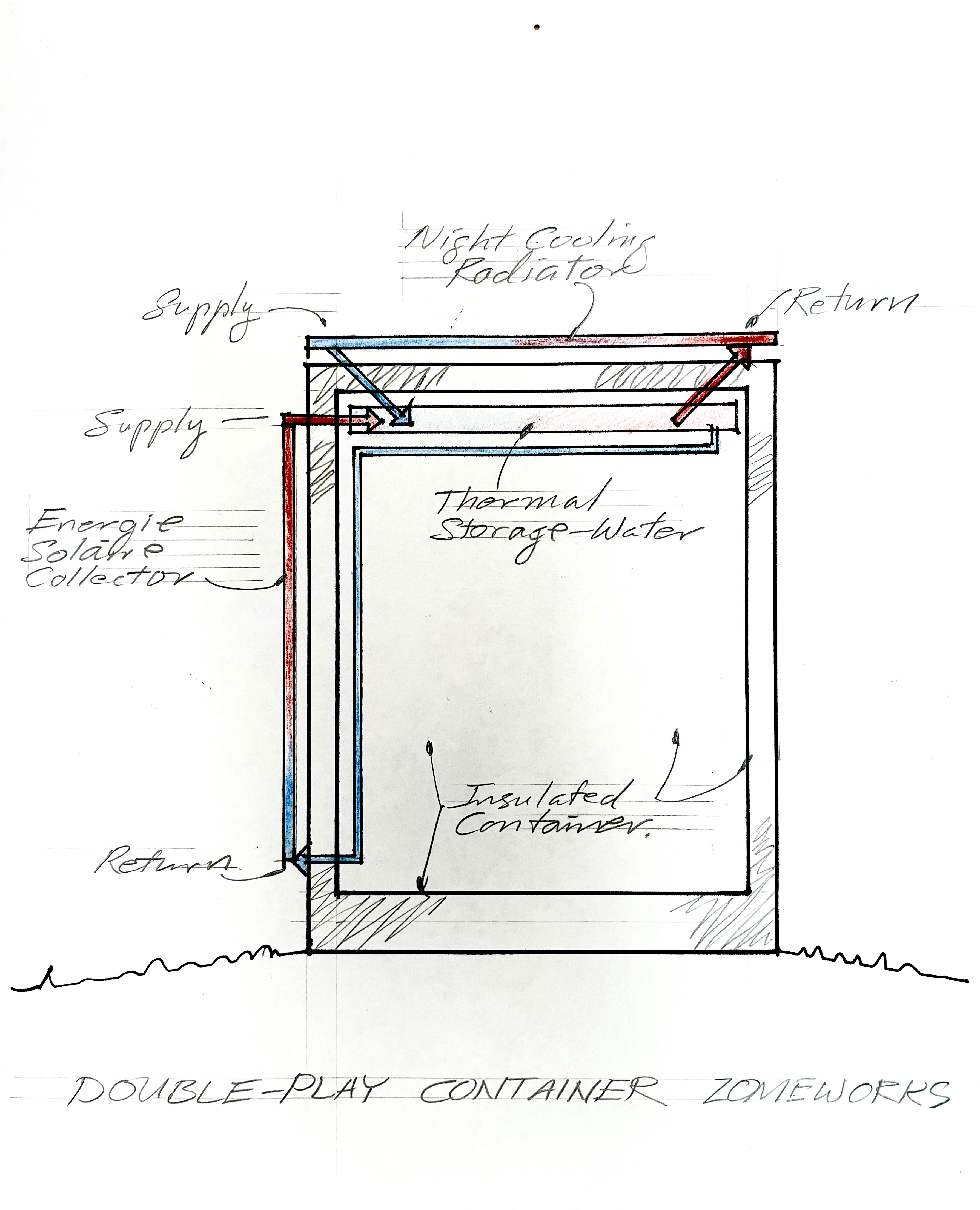
Credit not established in raw record ("Source unknown"); hand-drawn Zomeworks schematic.
Patent reference 1: stock pond melter, US 3,618,569
- Baer's closed-loop convective device keeping a livestock ice hole open
- The KB calls it the conceptual seed of the double-play thermosiphon loop
- Engineering reference only; the KB does not establish current patent status
https://kb.solarfool.org/works/stock-pond-melter/
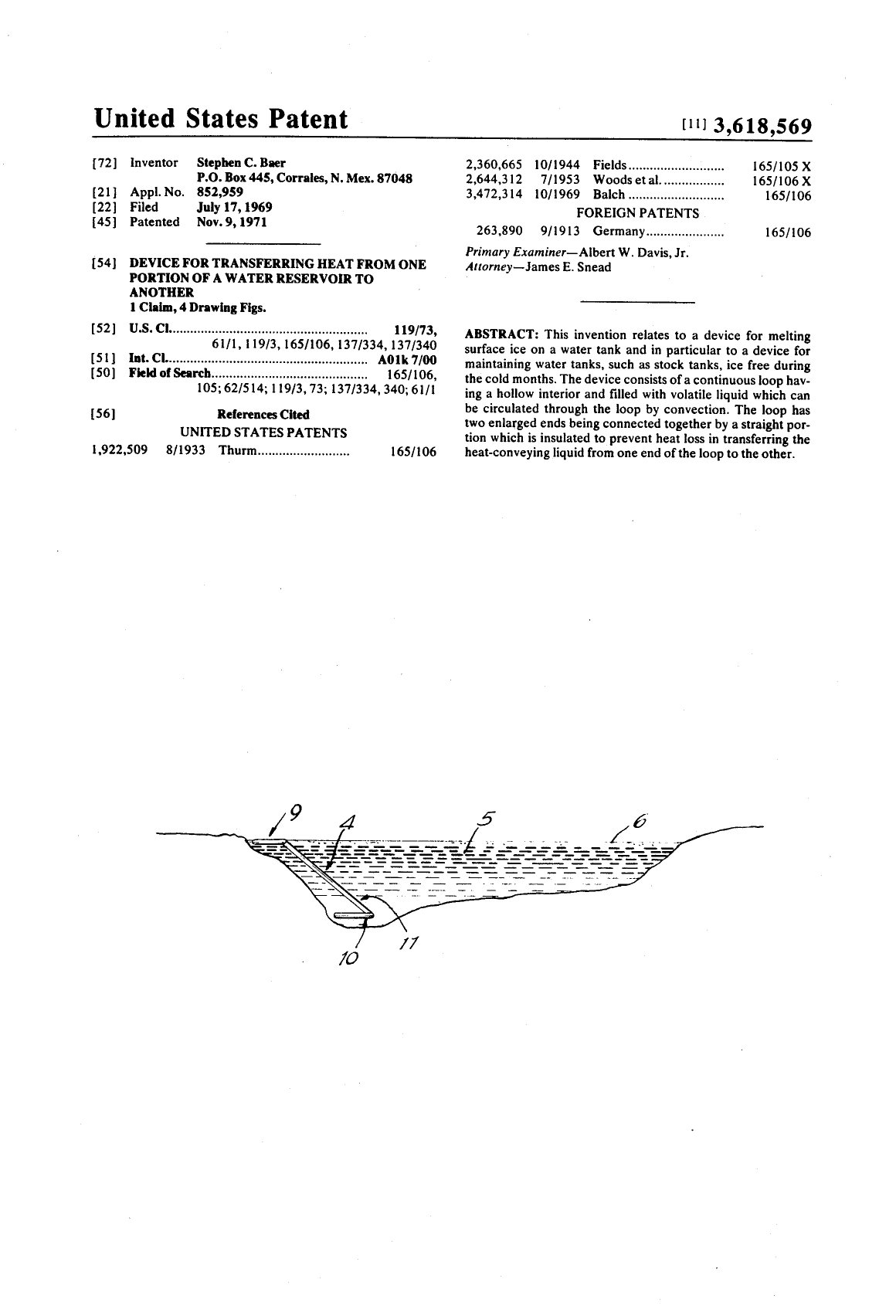
USPTO / public record.
Patent reference 2: Skylid, US 3,884,414
- Insulated skylight louver that opens and closes itself using refrigerant-canister weight shifts
- No electricity, thermostat or motor: physics does the control work
- The KB does not establish this: current patent status
https://kb.solarfool.org/works/skylid/
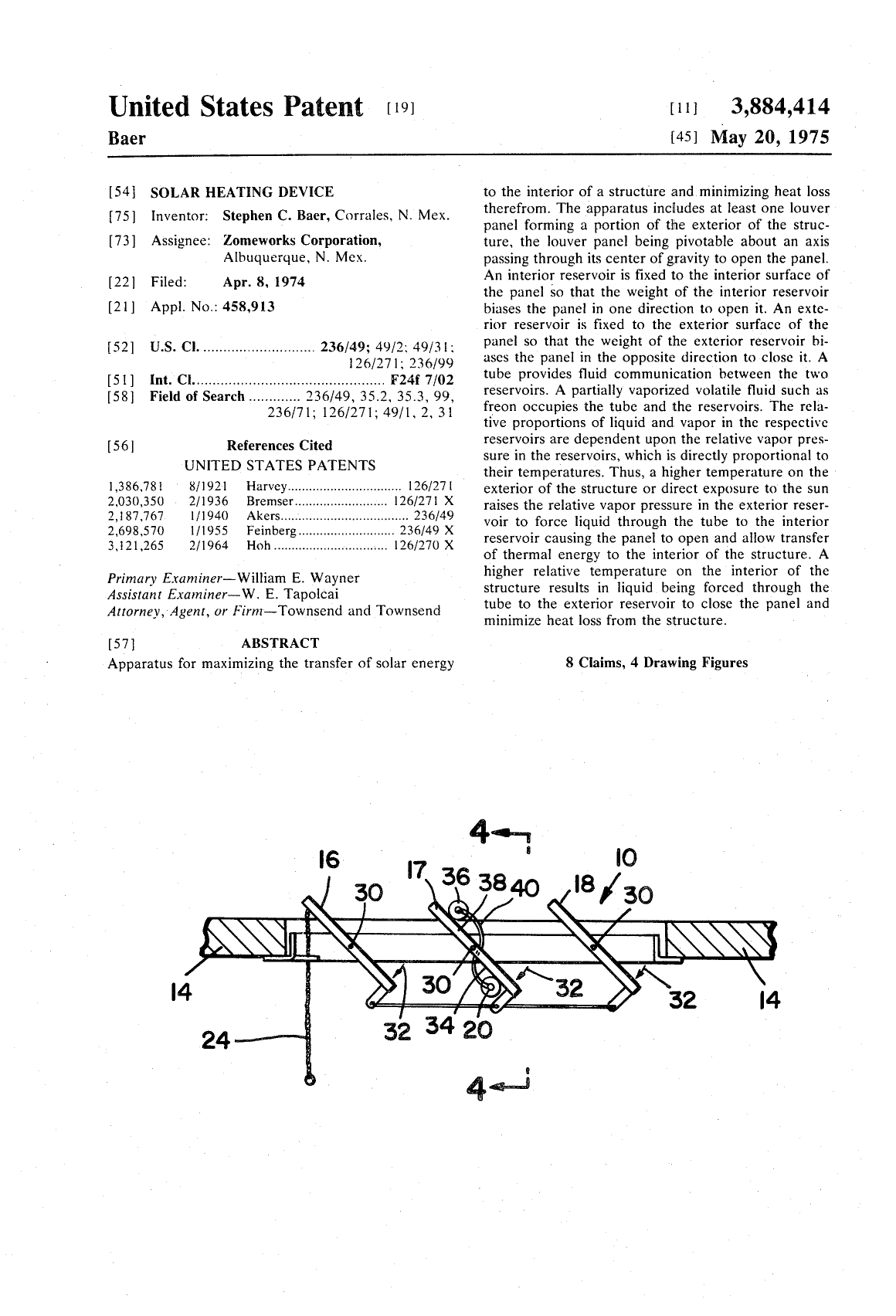
USPTO / public record.
Patent reference 3: Cool Cell, US 6,357,512 B1
- The Zomeworks passive heating and cooling patent underpinning Double Play
- Dated 2002 in the patent record; the Cool Cell article calls it the 2001 patent
- The KB does not establish this: expiry or legal status. Not legal advice.
https://kb.solarfool.org/works/us-patent-6357512/
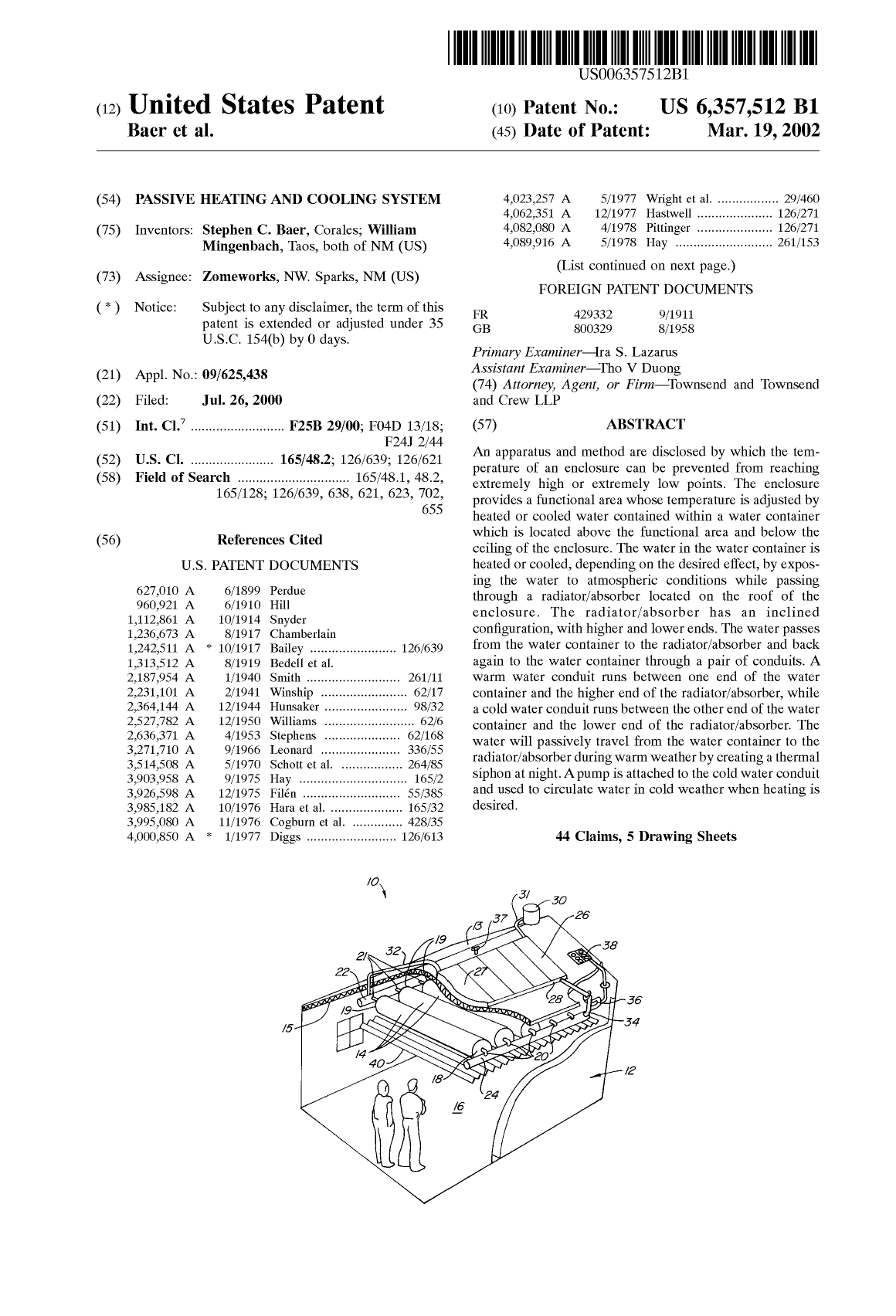
USPTO / public record.
What exists, and what is only documented
- Built and photographed: Andy Shack (no longer extant), Davis studio, Sol-Mod house, NM container prototype
- Measured: Davis studio (2004, cooling only, 5–7 years); container is unmeasured storage (40–90°F target)
- Community-reported; no published test data in this KB: 65-75°F indoors at 110-120°F outside (https://kb.solarfool.org/concepts/solar-fools/)
CoolSky FAQ: https://kb.solarfool.org/output/faq-coolsky-2026-10-10/ Knowledge base: https://kb.solarfool.org/